
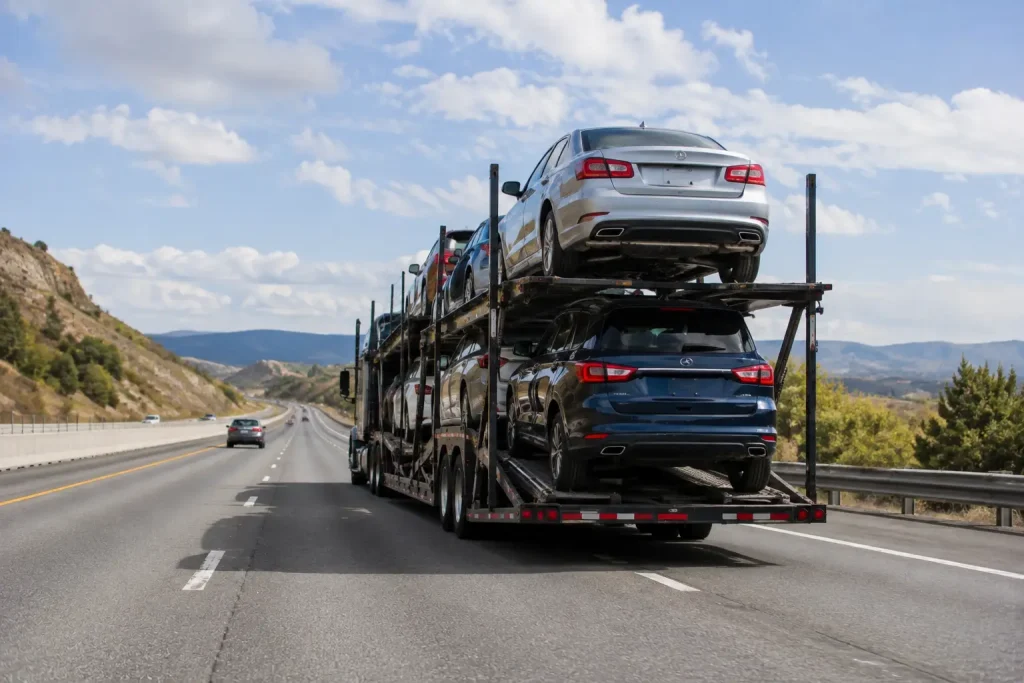
Texas to California is one of the busiest auto transport lanes in the country, and that works in your favor. High volume means more carriers running the route, more competition on price, and shorter pickup windows than you'd get on a lane carriers rarely travel.
It's also a route that mostly avoids the weather problems that complicate northern corridors. Carriers run I-10 or I-20 west through New Mexico and Arizona, and outside of occasional mountain conditions, winter isn't the factor it would be shipping through Denver or Chicago.
Why This Route Runs Both Directions
Most transport lanes are lopsided — full one way, empty the other. Texas and California is unusual because meaningful volume moves both directions.
People relocate from California to Texas for lower housing costs and job opportunities, and a number of major companies have moved headquarters or major operations to the Dallas and Austin areas over the past decade. At the same time, plenty of people move the other way for work, school, and family.
That two-way demand is why the lane prices as well as it does. Carriers aren't pricing in an empty return trip.
The Distance Is the Real Argument
These are the second and third largest states in the country by land area, and the distance between them is substantial.
Los Angeles to Dallas is roughly 1,435 miles — around 21 hours of driving, which realistically means two days. Northern California to the Texas Gulf Coast can push past 30 hours behind the wheel.
Add fuel, two nights of hotels, meals, and the wear you're putting on the vehicle, and driving it yourself stops looking cheap. Then add the value of two or three days of your time. For most people making this move, shipping the car and flying is the more sensible math — particularly if you own a second vehicle someone else needs to drive.
Common Origin and Destination Points
From Texas: Dallas-Fort Worth, Houston, San Antonio, Austin, and El Paso all have constant carrier presence and schedule quickly. West Texas and the Panhandle are further from the main corridors and take longer to arrange.
To California: Los Angeles, San Diego, the Bay Area, and Sacramento are all high-volume destinations with strong availability. The Central Valley is straightforward. Far northern California above Redding, the Sierra foothills, and the eastern desert are genuinely remote and priced accordingly.
El Paso is worth calling out — it's roughly 800 miles from Los Angeles, less than half the distance from Dallas. If your move originates in West Texas, the quote will look very different from one starting in Houston.
What Affects the Price
There's no fixed rate on this lane, or any lane. Pricing reflects what carriers are willing to run that week, and several things move it.
Exact origin and destination. Metro to metro prices best. Anything requiring a carrier to detour well off I-10, I-20, or I-40 costs more.
Vehicle size and weight. A trailer has finite space and a legal weight limit. A three-quarter-ton truck or large SUV takes more of both than a sedan. Mention lift kits, roof racks, or oversized tires when you get a quote.
Open or enclosed. Open handles the vast majority of moves. Enclosed runs meaningfully more and makes sense for classics, exotics, low-clearance builds, or anything where condition is the point.
Whether it runs. A non-operable vehicle needs a winch-equipped carrier, which is a smaller pool of trucks. Tell us at booking whether it rolls, brakes, and steers.
Timing. Summer is peak relocation season nationwide and capacity tightens. Flexible dates are worth real money; a hard deadline costs more.
Access at both ends. A car carrier is about seventy-five feet long. Gated communities, tight residential streets, and low parking structures often can't accommodate one, and we meet at a nearby lot instead. Routine, but better sorted at booking than on delivery day.
How Long It Takes
Most Texas to California moves complete in three to six days once the vehicle is picked up, depending on the specific origin and destination and how many stops the carrier has.
Booking two to three weeks ahead is a good target. During summer peak, give it three to four. Carriers deliver against a window rather than a fixed appointment — weather, traffic, and other stops all move the timeline, and any company promising an exact hour is telling you what you want to hear.
Getting Your Vehicle Ready
- Wash it. You'll be documenting existing damage at pickup, and road grime hides it.
- Photograph it yourself. All four corners, roof, wheels, and any existing chips or dents, timestamped.
- Leave about a quarter tank of fuel. Enough to load and unload, not enough to add weight.
- Remove toll transponders so your TxTag isn't accruing charges while the car rides on a truck.
- Empty it out. Cargo insurance covers the vehicle, not belongings. A small amount in the trunk is usually acceptable — confirm the limit when you book.
- Mention any quirks. Weak battery, sensitive alarm, aftermarket suspension. The driver needs to know before loading.
What to Expect
- Quote. Origin and destination ZIP codes, target dates, and vehicle details. Takes about a minute.
- Carrier assigned. Once a specific truck is booked for your vehicle, you'll have a pickup window. No deposit before that.
- Pickup and inspection. The driver documents the vehicle's condition on the bill of lading with you present. You get a copy.
- Transit. We stay in contact and update you if the schedule shifts.
- Delivery and sign-off. Inspect against the original report before signing.
Shipping the Other Direction
We run California to Texas just as often. Same corridors, same carriers, and the two-way volume means neither direction carries a significant premium over the other.
If you're relocating and need to move more than one vehicle, ask about multi-vehicle pricing — it's common on this lane and usually better than booking each separately.
Get a Quote
Quotes are free and take about a minute. No phone call required, and no deposit until a carrier is assigned to your vehicle. We don't sell your information to a list of brokers, so you won't get twelve calls after submitting — you get one quote and one point of contact from pickup to delivery.
For pickup points, transit times, and what affects pricing at either end, see our Texas auto transport page and California auto transport page, or browse every state we serve.